Thai massage is often the surprise on the menu because a treatment described as relaxing can involve firm pressure, deep stretches and far more movement than a first-time guest expects. Oil and foot massage require far less movement from the guest, although the two treatments have little else in common.
Traditional Thai is often the first massage Pattaya visitors consider, yet it can be the wrong choice for someone who wants to lie still and switch off. Oil massage offers a full-body treatment without assisted stretches, whereas foot massage keeps the attention on the feet and lower legs. The choice depends mainly on how much movement, pressure and skin contact you are comfortable with.
What Thai massage asks of you
Traditional Thai massage is active even though the guest is not doing the work. You change into loose cotton clothing, then the therapist uses hands, thumbs and body weight for rhythmic compression and assisted stretches. Legs may be lifted or bent, shoulders rotated and the body moved into different positions as the treatment progresses. Because no oil is normally used, the therapist works through the clothing.
People who already enjoy stretching often take to Thai massage quickly. It can feel satisfying after a flight, long drive or several days spent at a desk, particularly when tightness has settled across several areas. It is a poor match for anyone who dislikes being repositioned or prefers to remain completely passive. People often leave feeling looser and more alert rather than sleepy, which is part of the reason Thai massage feels so different from an oil treatment.
The quieter appeal of oil massage
Oil massage removes the assisted stretching and most of the repositioning. After changing into private undergarments, you lie on the table as the therapist uses warm oil and long movements across the skin. This gives the session a slower, more continuous feel and lets you settle without wondering where your arm or leg is going next. Oil massage does not have to be light, and pressure can still be firm despite the slower style. Ask for the strength you prefer rather than assuming oil always means gentle. Aroma massage uses warm essential oils, making fragrance part of the session as well, so ask what oils are available if you dislike strong scents or have sensitive skin.
When foot massage earns its place
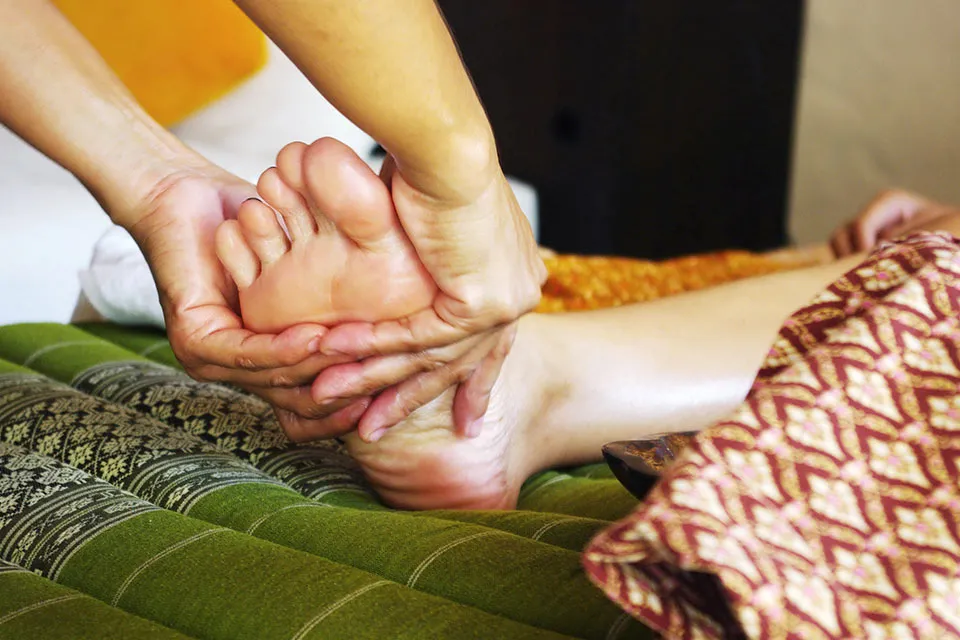
Foot massage suits anyone who wants a focused treatment without changing clothes or being moved through Thai stretches. Health Land describes its version as reflexology-based, with attention given to pressure points in the feet. Reflexology can feel surprisingly precise, particularly on sore areas, so the treatment is not necessarily as gentle as the smaller treatment area might suggest.
After a day walking around Pattaya, several hours on a golf course or an evening spent standing, concentrated work on the feet and lower legs can feel far more welcome than a full-body massage. It also suits guests who want a spa treatment but dislike oil or do not feel comfortable changing down to private undergarments.
Pressure deserves a brief conversation before treatment begins because Thai massage can be softened, and oil or foot massage can be firmer than its name suggests. Tell the therapist if anything feels uncomfortable instead of waiting for them to notice, especially during a stretch. The spa also asks guests to disclose pregnancy, allergies, high blood pressure and recent injuries at reception so the treatment can be adjusted before it begins.