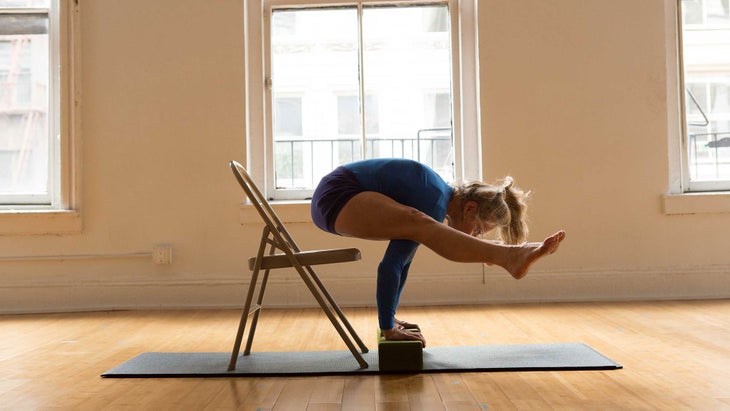
Not everyone feels comfortable getting down to the mat, and that should not prevent them from practising yoga. chair yoga offers an accessible way to improve movement confidence without requiring floor-based postures. It allows students to practise seated or supported movements while still receiving the benefits of breath awareness, mobility, posture work and calm focus. Accessible yoga matters because many people avoid movement when it feels intimidating. They may worry about balance, pain, stiffness, age, injury history or whether they can keep up with a class. A chair-supported practice reduces many of these concerns. It gives students a stable base, allowing them to explore movement gradually and safely.
Why floor-based practice can feel difficult
Traditional yoga often includes transitions between standing, seated, kneeling and lying positions. For some students, those transitions are not easy. Getting down to the floor may be uncomfortable. Getting back up may feel unsafe. Kneeling may bother the knees. Balance may be uncertain. When these concerns are ignored, students may feel excluded. They may assume yoga is not for them. Accessible yoga changes the experience by removing unnecessary barriers. A chair allows the practice to stay active and meaningful without requiring floor transitions. Students can still twist, fold, stretch, strengthen, breathe and improve posture.
Movement confidence starts with safety
Confidence grows when the body feels safe. If a student is worried about falling, straining or being judged, the nervous system stays tense. Movement becomes guarded. The chair offers reassurance because it provides support. This support makes it easier for students to try. They can explore range without fear. They can pause when needed. They can use the chair to stabilise the body during supported standing postures. Safety does not mean the practice is effortless. It means the challenge is suitable.
Building mobility in small steps
Accessible yoga often works through gradual movement. A seated side bend may improve awareness of the ribs and spine. A gentle twist may help the back feel more mobile. Shoulder circles may release tension from screen use. Supported leg movements may help the hips and knees. Small movements can still be powerful when done with attention. Many people underestimate the value of moving slowly and consistently. The body responds well to repeated, safe movement.
Areas accessible yoga can support
A chair-supported practice may help students work on:
- Shoulder mobility
- Spinal movement
- Hip and knee comfort
- Ankle and foot awareness
- Breath control
- Postural support
- Gentle balance confidence
These areas affect daily activities such as sitting, standing, walking and reaching.
Breath and nervous system support
Accessible yoga is not only physical. Breath awareness can help students feel calmer and more connected. Many people breathe shallowly when stressed or unsure. A guided practice can teach them to slow down and notice the breath. This is especially useful for students who feel anxious about movement. Breath gives them something steady to focus on. It also helps reduce unnecessary tension in the jaw, shoulders and chest.
Posture without forcing the body
Posture is often misunderstood. People may try to sit or stand perfectly straight, then become stiff and uncomfortable. Accessible yoga teaches posture through awareness rather than force. Students may learn to ground through the feet, lengthen the spine, soften the shoulders and breathe more fully. These cues can carry into daily life. Someone who spends long hours seated may become more aware of how they use the chair at work or home.
Why support does not reduce the value of yoga
Some people think using a chair makes yoga less authentic. This is not true. Yoga is not measured by how difficult a posture looks. It is measured by awareness, breath, steadiness and connection with the body. A supported practice can be deeply meaningful. It may even help students pay closer attention because they are not distracted by fear or discomfort. Support can create freedom.
Confidence for different life stages
Movement confidence changes over time. A person recovering from inactivity may need support. A senior may need safer balance options. An office worker may need accessible mobility during the day. A person with limited range may need a practice that respects their body. Accessible yoga can support all of these situations. It gives people a way to stay connected to movement during different life stages.
A supportive practice environment
A studio such as Yoga Edition can help students experience accessible yoga in a calm and respectful setting. The environment matters because people need to feel that supported practice is valued, not treated as secondary. With good teaching, chair-supported yoga can feel empowering. Students learn that movement can be adapted without losing purpose.
A more inclusive view of yoga
Accessible yoga improves movement confidence by removing barriers and offering practical support. It allows students to experience yoga without needing to get down to the floor, perform complex postures or compare themselves to others. This approach is important because wellness should be inclusive. People deserve movement options that respect their bodies. Chair-supported practice shows that yoga can be strong, calming and meaningful even when it begins from a seat.